← Back to blog
Research

The Biggest Lever in Fall Prevention

One-third of your residents account for more than half of all falls. The fix is simpler than you think.

March 2026

32%

Of residents use walking aids

52%

Of all falls involve walking aid users

3.2x

Higher fall risk

67%

Fell without using their aid

Data deep dive companion to The Anatomy of 2,000 Falls. This piece goes deeper into the walking aid and wheelchair data from that analysis.

The headline finding

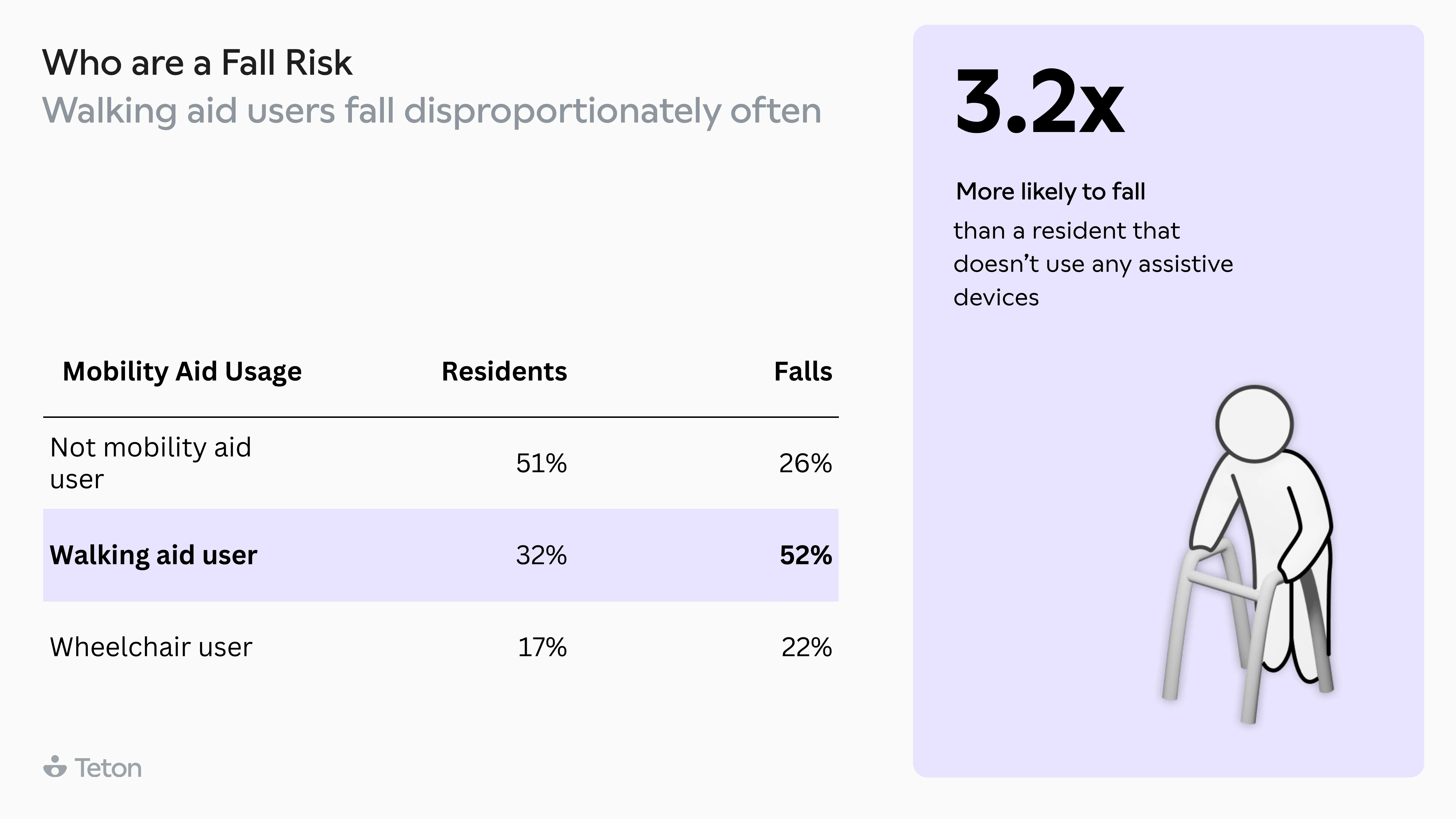
In our analysis of over 2,000 falls across care settings in four countries, one finding stood above the rest. Walking aid users are 3.2 times more likely to fall than residents who don't use assistive devices. They make up roughly a third of the resident population but account for more than half of all recorded falls.

Walking aid users: 32% of residents, 52% of falls, 3.2x more likely to fall

It's not about the walking aid. It's about not using it

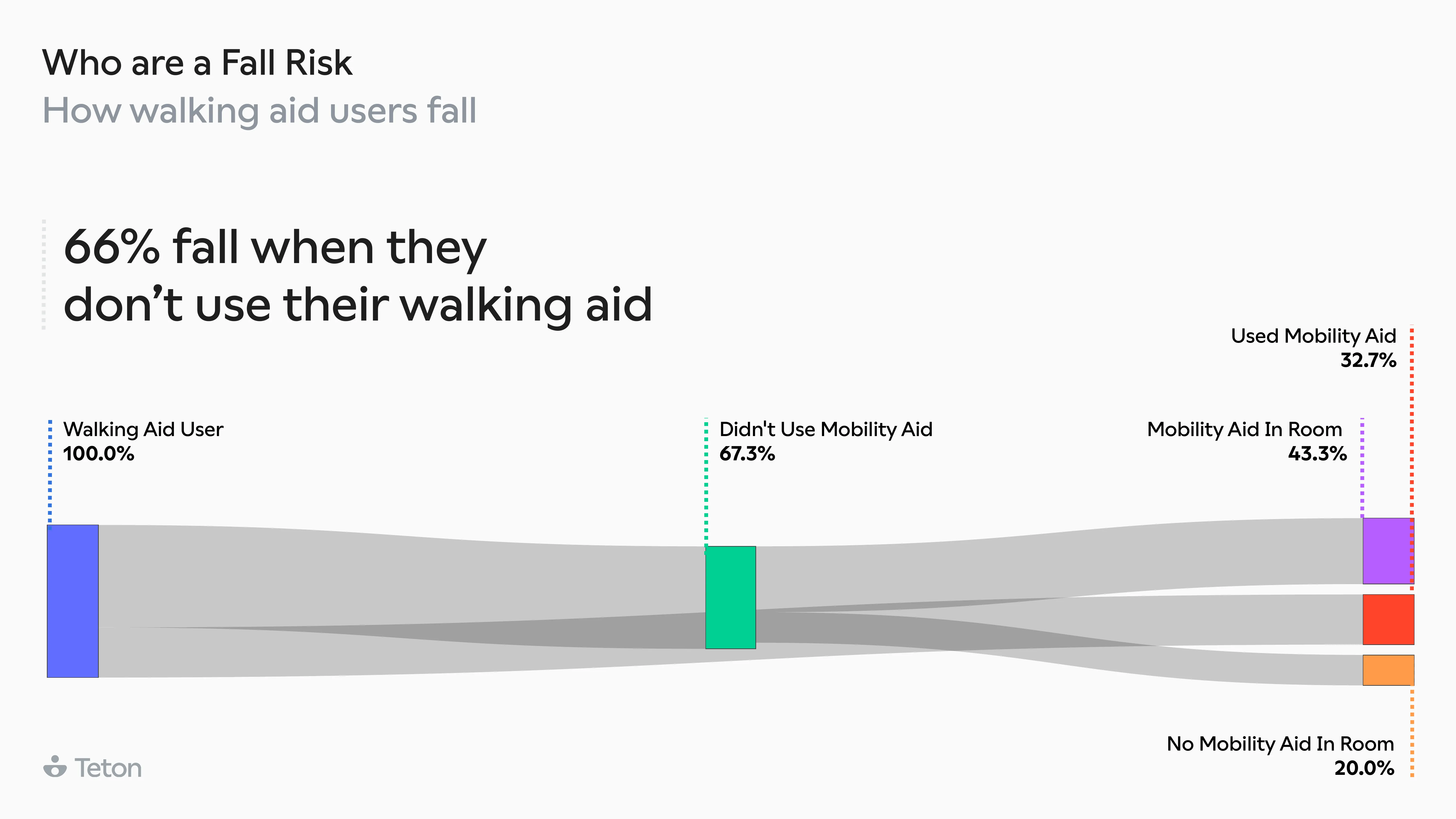
In 67% of cases, the resident wasn't using their walking aid at the time of the fall. And 43% of those falls happened when the aid was physically in the room but out of reach. The aid just needs to be within arm's reach. That's it.

Sankey: 100% walking aid users → 67.3% didn't use aid → 43.3% aid in room → 20% aid not in room / 32.7% used aid

43% of walking aid user falls happen when the aid is in the room but out of reach. The intervention takes 30 seconds: move the walker closer to the bed. The question is knowing when it's not there.

What the fall clips actually show

The numbers tell you what is happening. To understand why, we reviewed hundreds of pseudonymized fall clips. The same patterns come up again and again.

Walking without the aid

The most common pattern. A resident wakes needing the bathroom. Their walking aid is a meter away, not far, but far enough that getting to it means standing up first.

Reaching for the aid

The resident tries to do the right thing. The aid is a meter from the bed. They lean out, overbalance, and fall before getting their hands on it.

The walker got moved

A staff member parks the walker by the door. A cleaner moves it. A visitor shifts it. The resident goes to sleep with the walker nearby and wakes up with it out of reach.

Wheelchair users and bed transfers

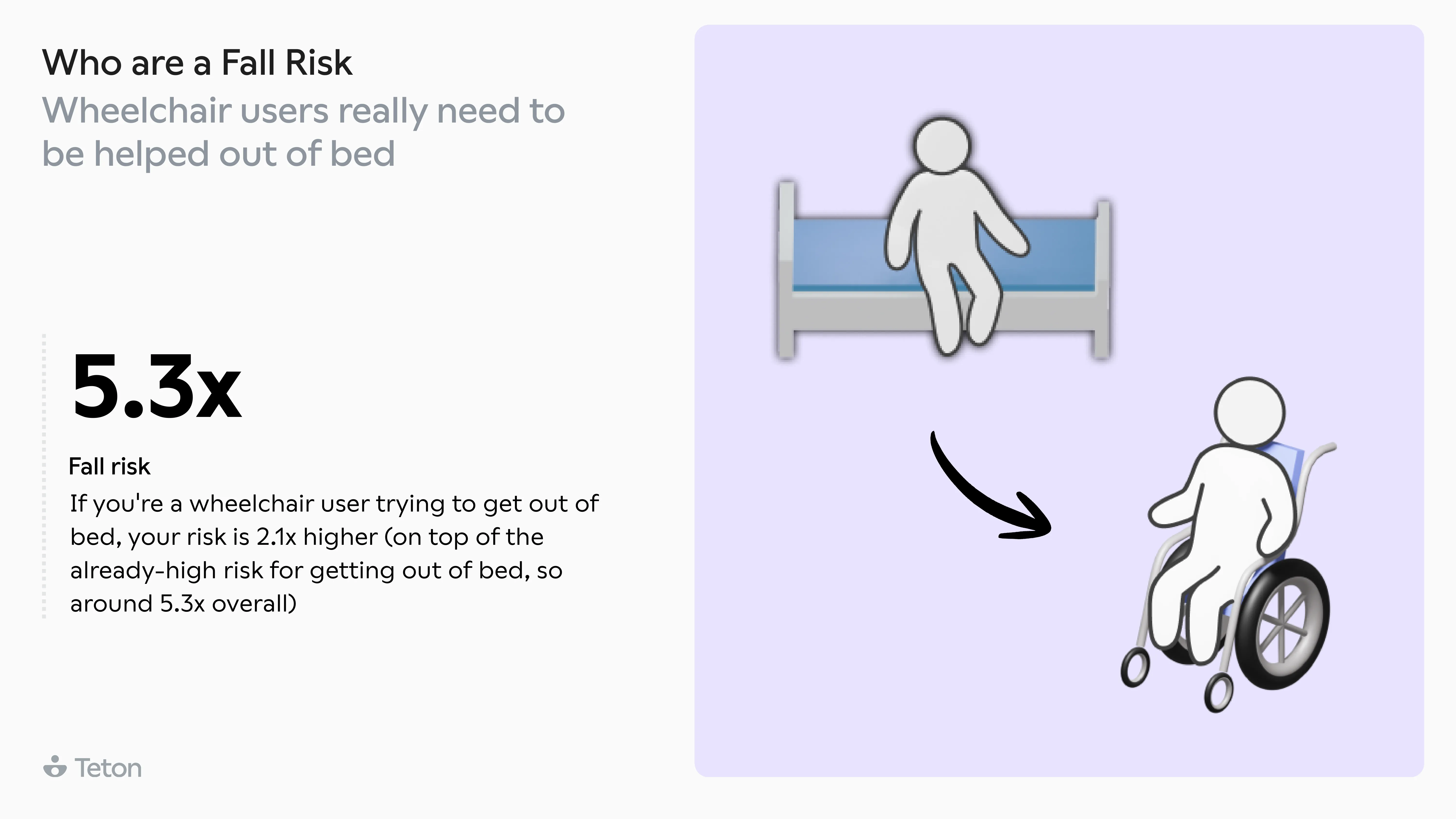
Wheelchair users face extreme compounding risk. The base risk of getting out of bed (2.5x) multiplied by the wheelchair user factor (2.1x) produces 5.3x total risk when a wheelchair user attempts to leave bed alone.

Wheelchair users: 5.3x fall risk when getting out of bed

Bed-to-wheelchair transfer

A resident attempts to move from the bed edge into their wheelchair without assistance. The wheelchair isn't locked in place, and the unsupported transfer becomes a dangerous movement — exactly the kind of high-risk moment that compounds the 5.3x fall risk.

What changes when you actually monitor for this

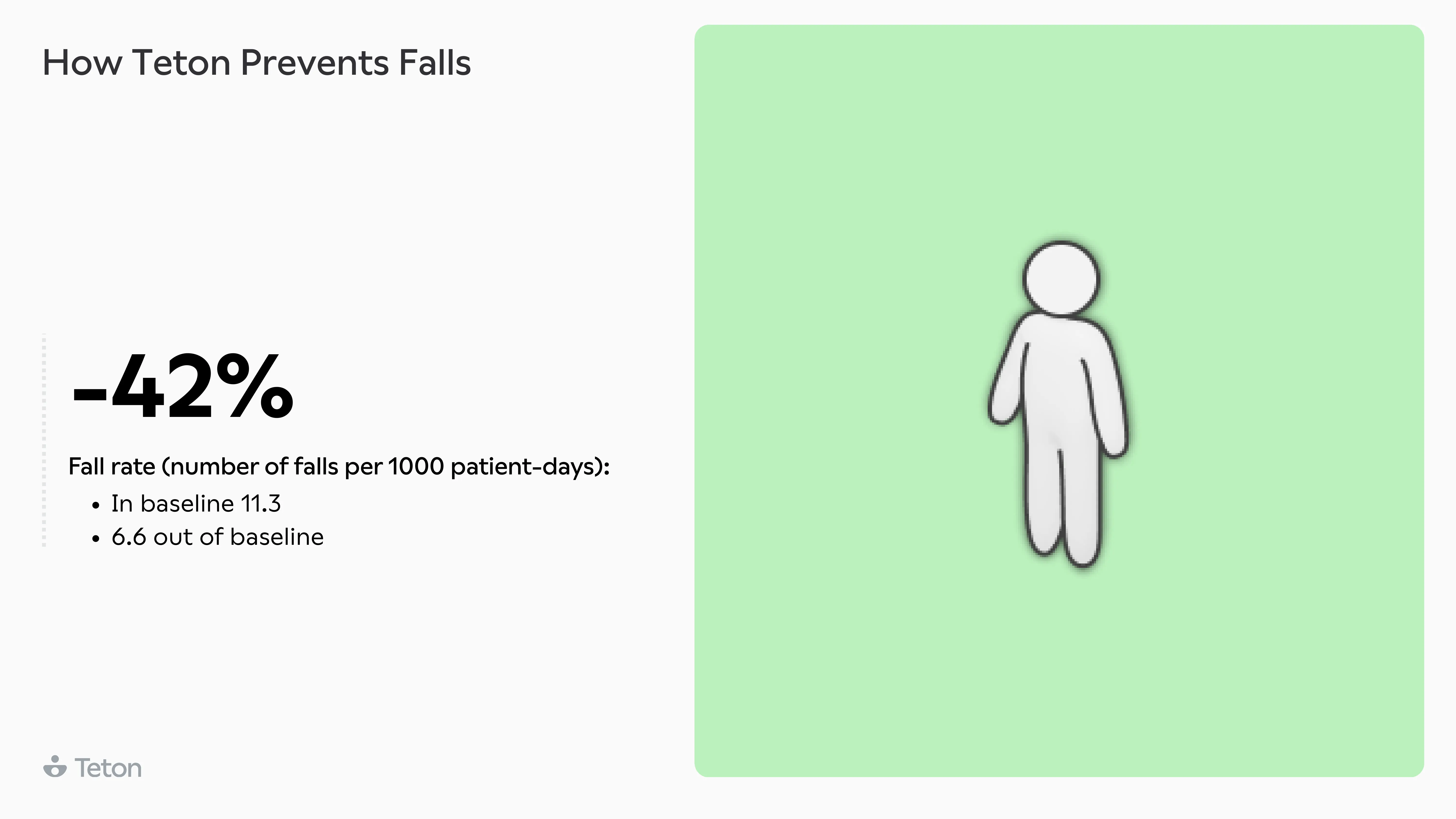
Facilities using Teton's walking aid and wheelchair alarms saw a 42% overall fall rate reduction. Wheelchair users: down 66%. Walking aid users: down 31%. These aren't projections — they're measured outcomes from live care settings.

Fall rate reduction: -42% overall, wheelchair users -66%, walking aid users -31%
42% fewer falls. Here's how.

See how walking aid and wheelchair monitoring works in your care setting — with your residents, your layout, your team.

Book a demo