← Back to blog
Product

Common Areas: How Teton Protects the Whole Community

Part 1 and Part 2 of this series covered how Teton understands the resident and their room. With the launch of Common Areas, Teton now extends that coverage across the full home.

May 26, 2026

The gap that operators have always lived with

Senior care technology has historically focused on the resident room. Monitoring, fall detection, health signals all built around what happens inside four walls. But 24% of falls happen outside the resident room, in hallways, dining spaces, activity rooms, and shared lounges.

When those incidents occur with nobody nearby, they go unwitnessed. There is no clip, no record of what led up to it, and no basis for adjusting the care plan. For operators, every undocumented incident is a liability exposure and a compliance gap, with no information to work from when trying to prevent the same thing happening again.

Until now, the tools available simply did not follow residents past their door.
Teton now covers the full home

Common Areas extends Teton's same sensor architecture already running in resident rooms into hallways, dining spaces, activity rooms, and shared lounges. For care teams, nothing changes about how they work. What changes is how much of the community they can actually see.

During installation, each sensor's 3D view is calibrated into a single coordinate frame across the whole facility. When a resident moves from their room into a hallway, their identity and accumulated context travel with them. The system treats it as a continuous journey rather than a handover between isolated devices, which means the care record stays intact across every space the resident passes through.

What care teams now see

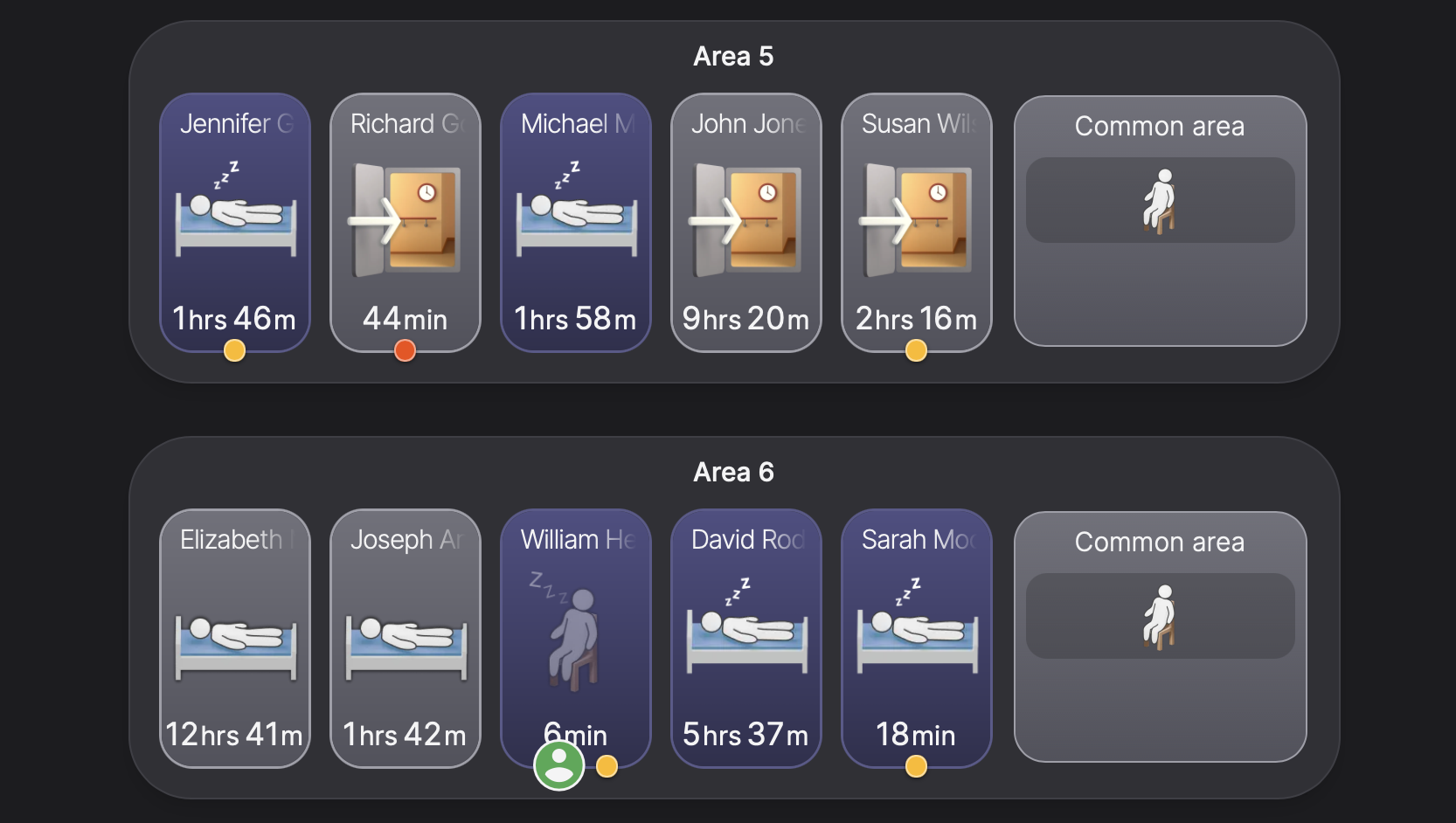
When a fall occurs in a common area, staff receive an alert with the same pseudonymized clip replay they are already familiar with from in-room incidents. They have the context to respond quickly and record the incident accurately. Real-time occupancy across the facility is visible in the same app, so staff can see where residents are and which spaces need attention without walking the building. Site managers gain access to common space usage data that was previously invisible, informing decisions about staffing, programming, and where risk concentrates across the community.

Common area resident card view showing Area 5 and Area 6

Resident names and data shown are fictional and used for illustrative purposes only.

What this means in practice

For an operator, an undocumented fall is not just a care failure. It is a liability without evidence, a care plan that cannot be updated because nobody knows what happened, and a family conversation that has to happen without any record to refer to. When that pattern repeats across common areas, it compounds. Regulators ask questions. Families lose confidence. And every gap in documentation is a gap in the operator's ability to demonstrate the standard of care being delivered.

Common Areas closes that gap across the whole building. Every incident in a shared space now generates the same documented record that exists for in-room falls, which means operators have consistent evidence wherever something happens and clinical teams have the information they need to adjust care plans based on what actually occurred rather than what was inferred.

Beyond incident documentation, the operational picture also changes. Staff spend less time walking the building to confirm where residents are and more time responding to those who actually need attention. Site managers gain visibility into how common spaces are being used across the day, which informs staffing decisions that have previously been based on routine rather than real demand. For operators competing for residents, the ability to demonstrate continuous monitoring across the entire facility is increasingly part of the conversation families are having before they choose a community, not just an internal operational benefit.

Where this fits in the wider Teton platform

Part 1 and Part 2 of this series established how Teton sees the room and understands the resident. Common Areas extends that foundation outward. It is built on the same architecture, operates on the same privacy-preserving principles, and surfaces in the same interface care teams already use daily. For residents, the continuity of monitoring that has always existed inside their room now follows them into the rest of the building, ultimately creating a safer care environment.

Learn more about Common Areas.

See Common Areas in action

Schedule a demo to see how Teton monitors the full facility and keeps residents safe wherever they are.

Book a demo