Every check on a resident, day or night, starts with someone standing outside their door, and then opening it. Nearly always there’s nothing wrong, by which point the door has already done its work.
The two-second safety check meant to confirm a resident is resting well can backfire, waking light sleepers and unsettling residents living with dementia, turning a routine check-in into a ten-minute resettle. Repeat that every 1–2 hours overnight across thirty rooms, and a significant share of the night ends up spent on checks rather than on care that could actually need attention.
Then there’s the paperwork. Each check gets logged after the fact, on paper or in the EHR, often once the caregiver is furthest from remembering the details. The record shows a round happened, but rarely when, why, or what state the resident was actually in. It may even show the round led to care, without capturing that the round itself is what disturbed the resident in the first place. The check ends up costing the resident sleep and the caregiver time, and the record it leaves behind still cannot be relied on.
With Teton, the caregiver checks in from their phone, no matter where they are in the building, seeing how the resident’s doing with an anonymized snapshot of the room, all without opening the door or disturbing their sleep.
What is a digital check?
A digital check is the same type of wellbeing check a carer currently does, however it can be carried out from the Teton app instead of from inside the room.
Teton’s ceiling sensor is passively working out a resident’s state continuously. Digital checks put those signals in front of a caregiver at the moment they’re deciding whether they need to go into the room, or not. It provides the context that helps inform the carer’s decision on what to do next.
From the app, a caregiver initiates a digital check on a specific resident, or residents. This digital check returns an anonymized snapshot of the room, along with the resident’s current state (e.g. in bed sleeping, or in the chair), and how long they have been in that state, as well as the last time someone conducted a physical check.
From there the caregiver picks one of two outcomes. If during the digital check a carer can identify that the resident looks settled, they mark the check complete and the system logs the check. If something looks off, for example they are closer to the edge of the bed or their blankets are now on the floor, that is something they would need to go and check. In that case they complete the digital check by noting a “physical check needed”. The system automatically logs this, as well as when the staff then go in to perform that check.
Yesterday, I used Digital Checks to check on the residents without disturbing them. It allowed me to go home with peace of mind.
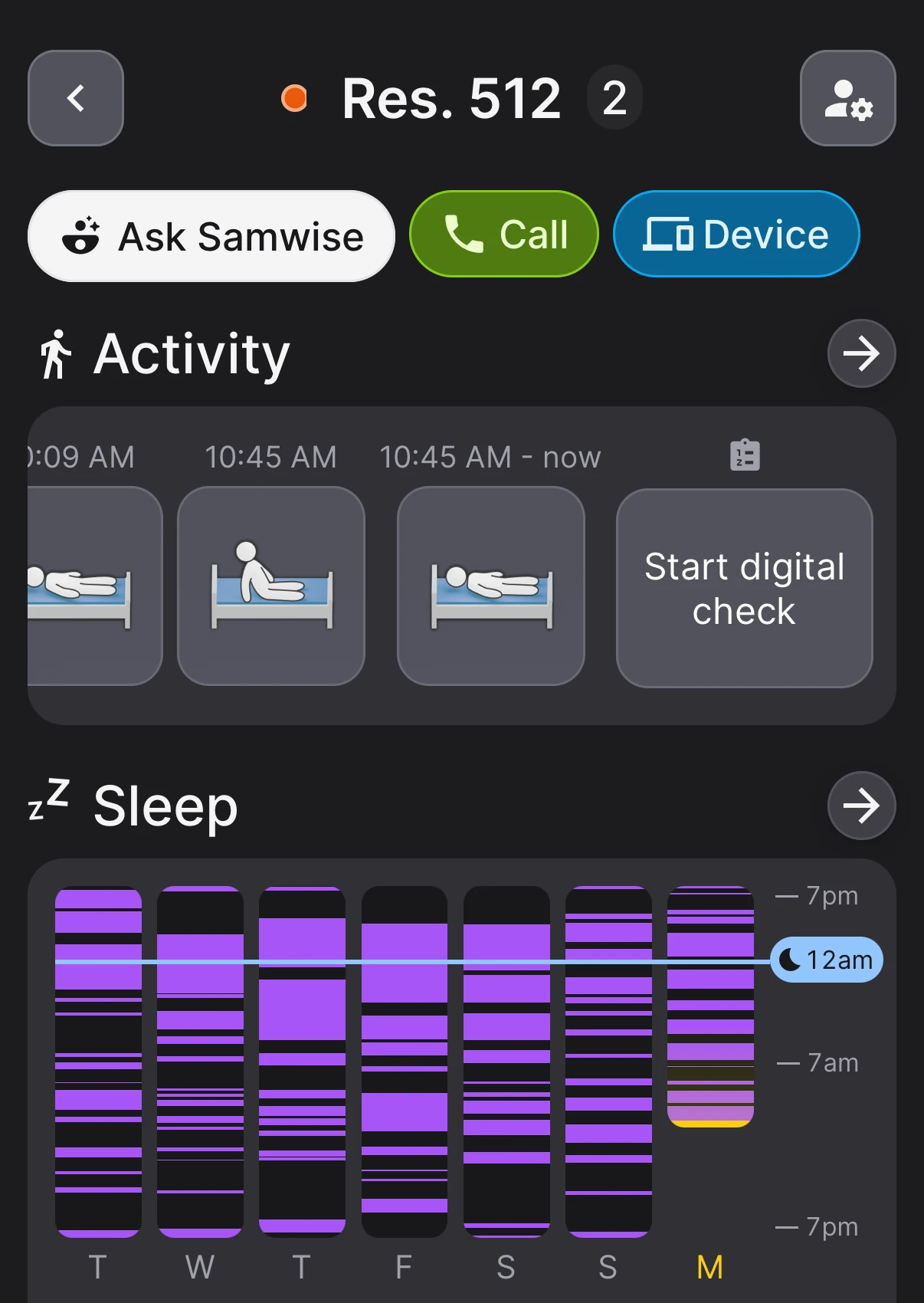
From the resident's Activity widget, the caregiver starts a digital check.
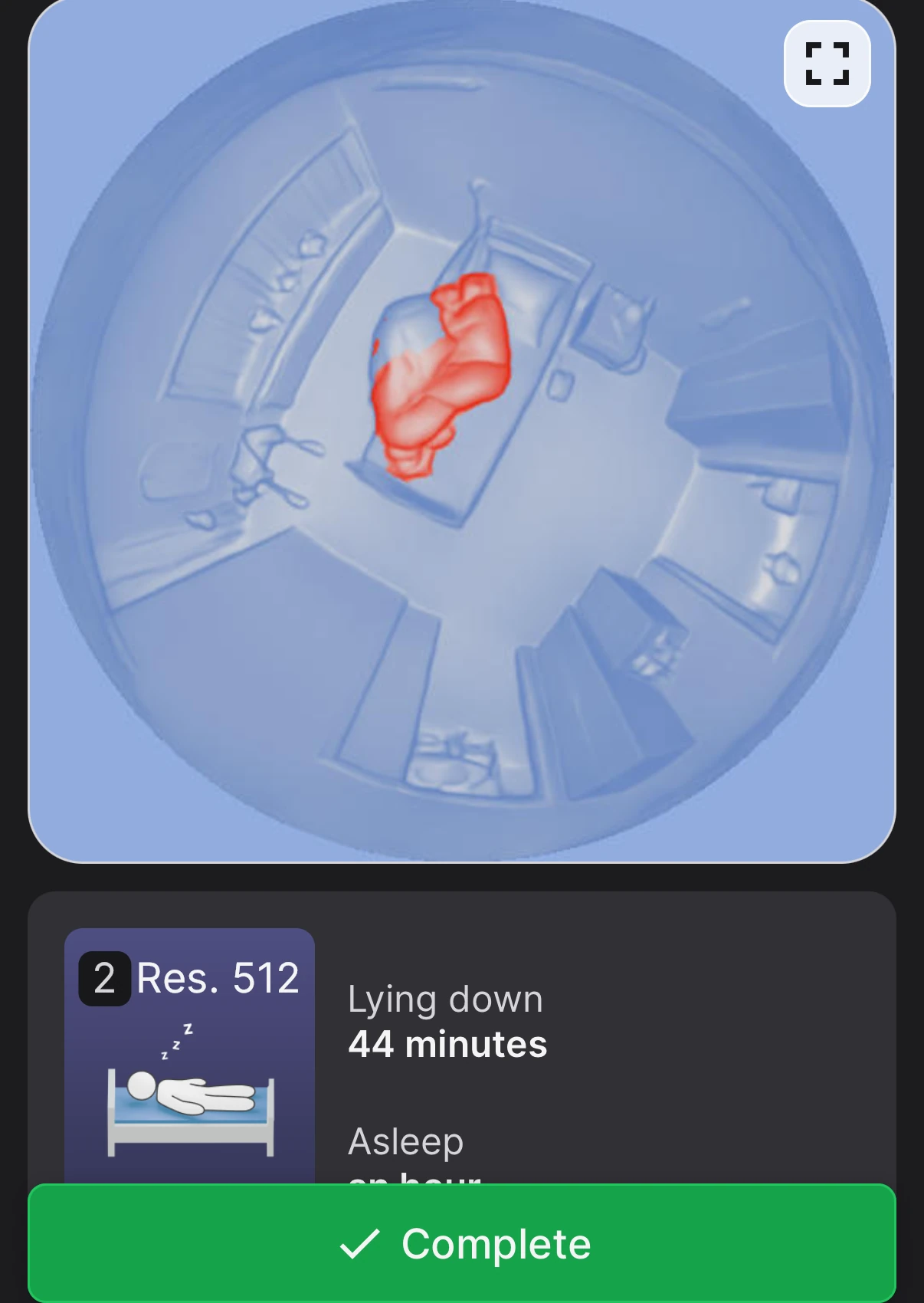
An anonymized frame of the room comes back, with the resident highlighted.
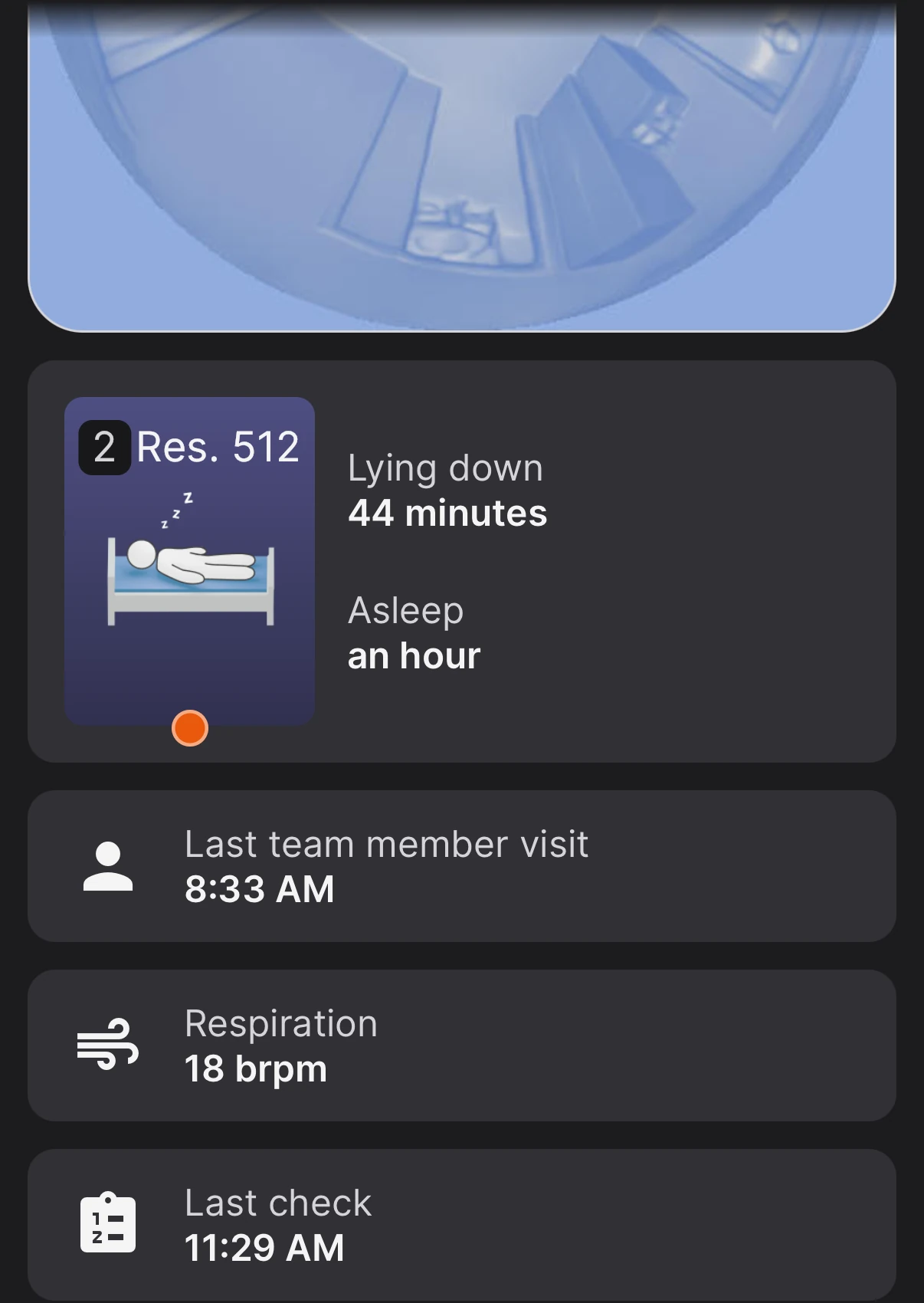
Alongside it: current state, time since the last physical visit, and respiration.
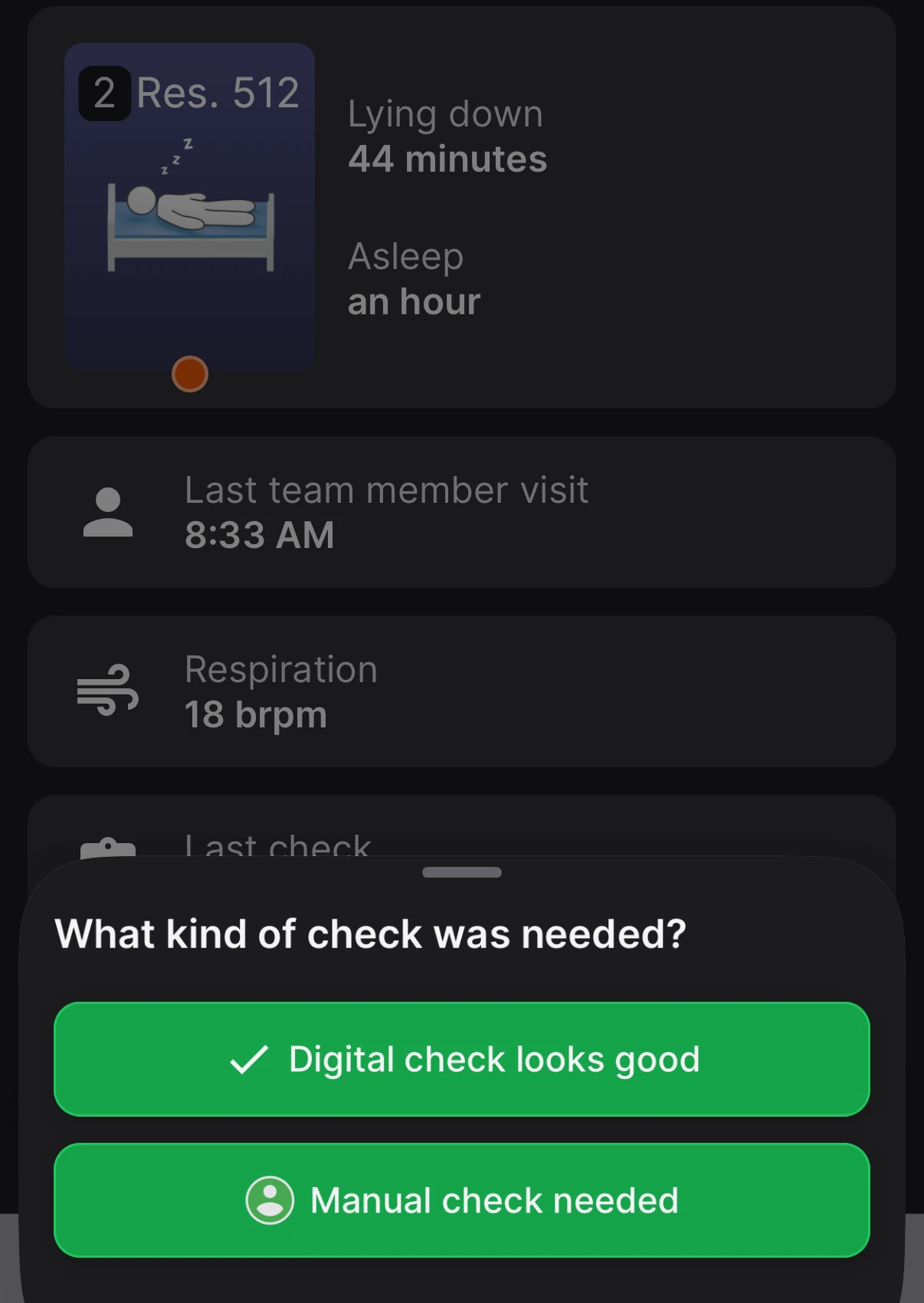
Two ways to close it: the digital check looks good, or a manual check is needed.
A digital check doesn’t replace physical checks. It improves how they’re done. The caregiver still performs the check, just digitally, using that information to decide how to deliver care. Previously, getting that same information required a physical check every time, creating inefficiency instead of purposeful rounds. Deciding to go in is a normal outcome of the workflow rather than a sign that it failed.
Documentation is both streamlined and more accurate
As staff members complete them, checks get logged in real time, so that there is no need for documenting after the fact.
Care home leaders get the analytics on rounding completion patterns by day, week and month, per resident and per unit, which shows how rounding actually runs rather than how it was reported afterwards. Teton integrates with several of the EHR systems care homes already run. In those that support it, Nourish Care for example, completed digital checks sync straight across without double entry.
In line with Teton’s commitment to preserving resident privacy and dignity, digital checks have built-in limits to ensure they are not misused:
- The same resident can't be checked digitally more than once every five minutes.
- A check can't be started while a staff member is already in the room.
- Snapshot images stay viewable for 24 hours only, then are automatically deleted, after which the rounding records and the data remain available.
Fewer, longer visits
Care teams on Teton now complete thousands of digital checks every week, contributing to a reduction in unnecessary wake-ups and returning minutes to the residents who need someone in the room.
A UK operator ran Digital Checks at one of its homes from August 2025 to January 2026, starting with a month of baseline data before staff were onboarded.
18.5%
Fewer total resident visits
42.3%
Longer average visit
20%
More resident-facing time
3.5
Digital checks per resident per day
The home averaged around 3.5 digital checks per resident per day. Their night checks, which meant walking in, typically finding nothing requiring care, and then walking out again, almost completely stopped happening. The caregiver could instead receive that information via a digital check.
Total visits fell 18.5%, the average visit ran 42.3% longer, and resident-facing time with carers increased by 20%.
A digital check took five to eight minutes less than the in-person equivalent. The effect was redistributing that same time directly back to the residents.
Learn more
We’ve written before about how Teton sees the room and how it understands each resident. Digital Checks turn that into something a caregiver uses on a round, alongside Current Resident Status and other capabilities, and it leans on what a million nights of sleep data told us: uninterrupted sleep matters most for exactly the residents that a routine check is most likely to wake.
Book a demo to learn more about how Digital Checks can be used in your community.