Digital monitoring technologies are becoming an increasingly important part of modern healthcare. As hospitals and care providers look for ways to improve patient safety and support overstretched staff, technologies such as computer vision, radar, and AI-assisted monitoring are moving from pilot projects into everyday clinical environments. Alongside this development, an important conversation is taking place around privacy, ethics, and proportionality.
These are necessary discussions, particularly in healthcare settings where dignity, trust, and human care must remain central. At the same time, conversations about monitoring technology can quickly become overly simplified. Discussions often focus primarily on how much data a system collects, rather than whether the system is able to deliver meaningful clinical value in a responsible way.
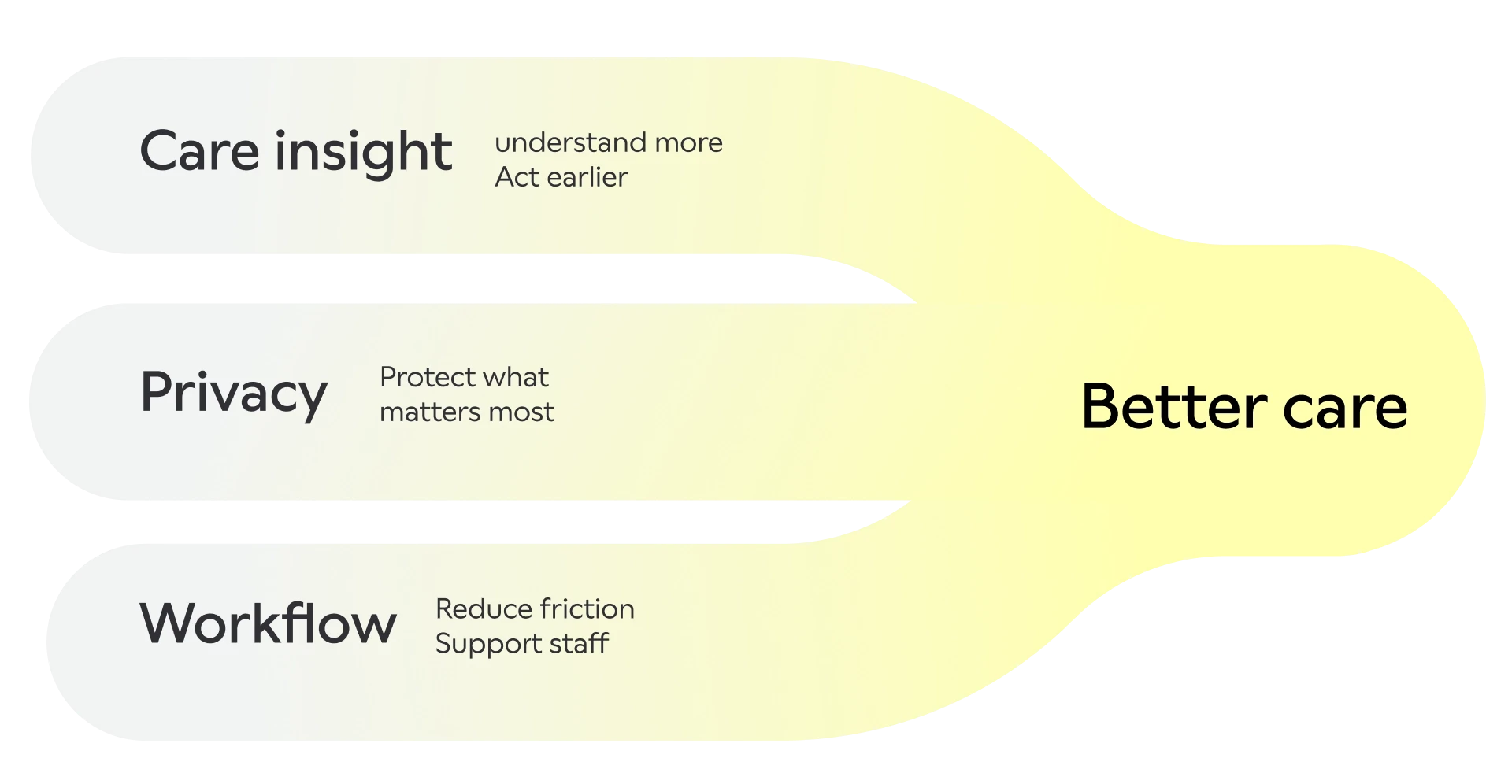
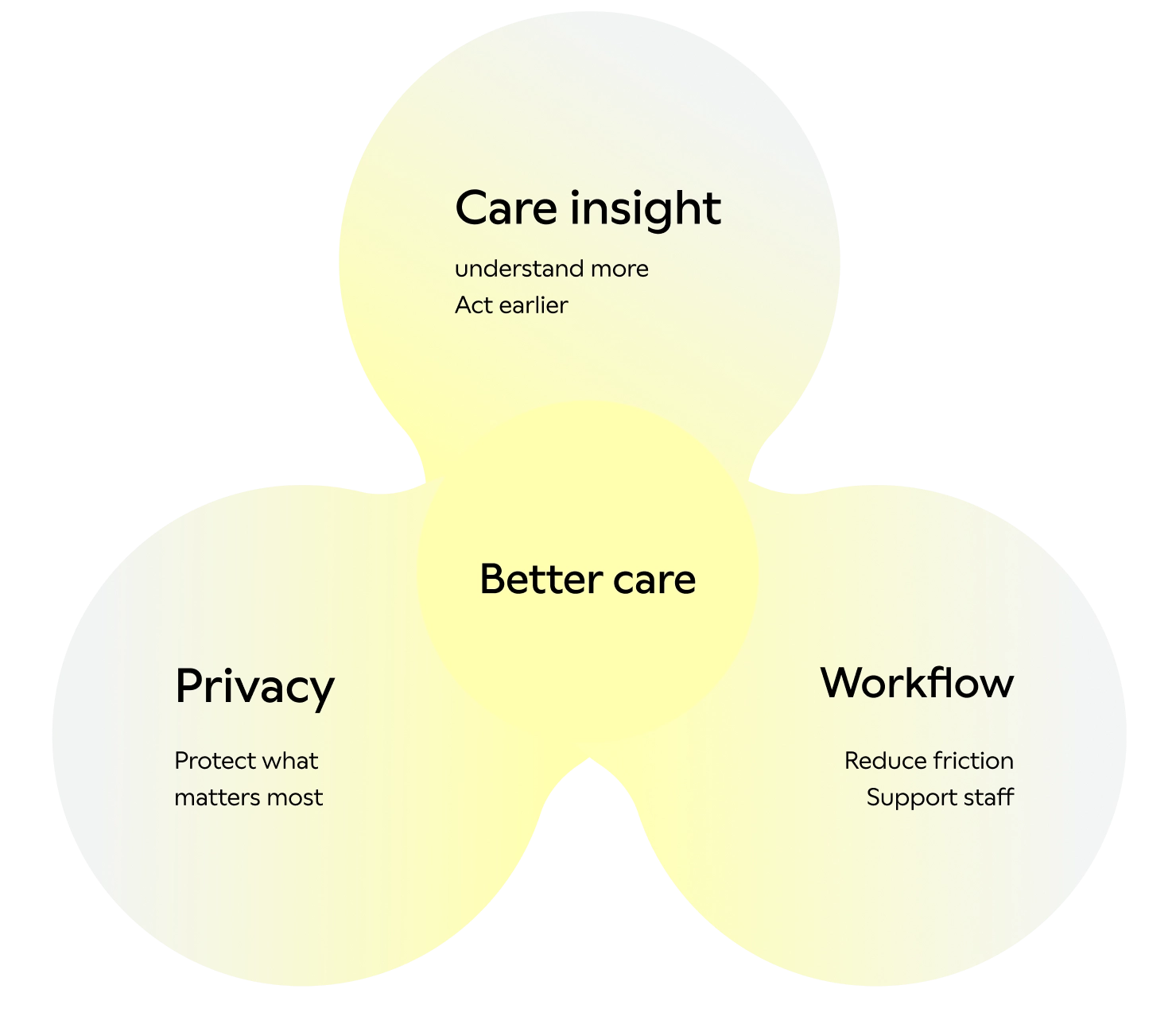
In practice, proportionality is more complex than minimizing data collection alone. Monitoring systems are introduced for a reason: to help identify risk earlier, support timely intervention, and improve patient safety. To do that effectively, systems need enough contextual understanding to distinguish meaningful events from background activity and to support workflows in real clinical environments. Falls, for example, are rarely isolated moments. They are often preceded by subtle behavioural or movement changes; attempts to mobilize independently, increasing instability, confusion, or repeated bed exits. Detecting these patterns reliably requires technologies that can interpret context, not just detect motion.
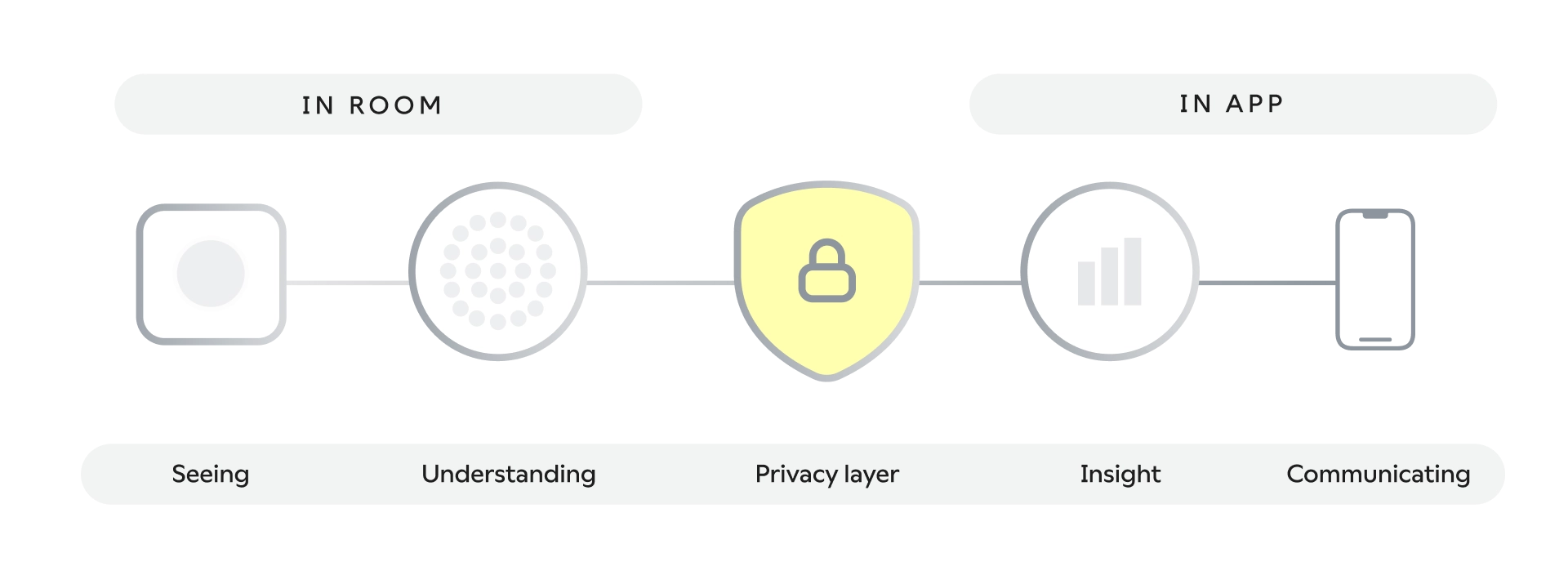
Discussion around privacy is more nuanced. The level of intrusion is not determined solely by whether a system uses cameras, radar, or other sensors. It also depends on how the system is designed, where data is processed, what information is retained, and how access is controlled.