Traditional e-call systems in senior living are often a source of frustration for both staff and residents.
Residents ask for help with basic buttons, while staff get pagers or call bells that are loud but uninformative, missing what the resident needs or who is responding. Every one of those calls is unscheduled care. Real work, delivered by staff outside the care plan and usually outside the record. Communities can deliver a great deal of it without holding any real data and leadership gets few practical insights into when calls come through and how they are answered.
Teton’s new E-Call solution combines AI computer vision with resident call technology to deliver unprecedented context about each call and the response to it. Teton’s ambient sensor technology creates a digital twin of care communities, continuously interpreting each resident’s position, movement and sleep in pseudonymized form, so the system knows whether someone is resting, up and unsteady, or already on the floor.
A modern alternative to fragmented call systems
For residents, the experience remains simple: press a button when help is needed. For care teams, the call becomes a coordinated process rather than another disconnected alarm. The request enters the Teton Alerts mobile application, a caregiver claims it, the wider team sees that it is being handled, and the assistance is documented.
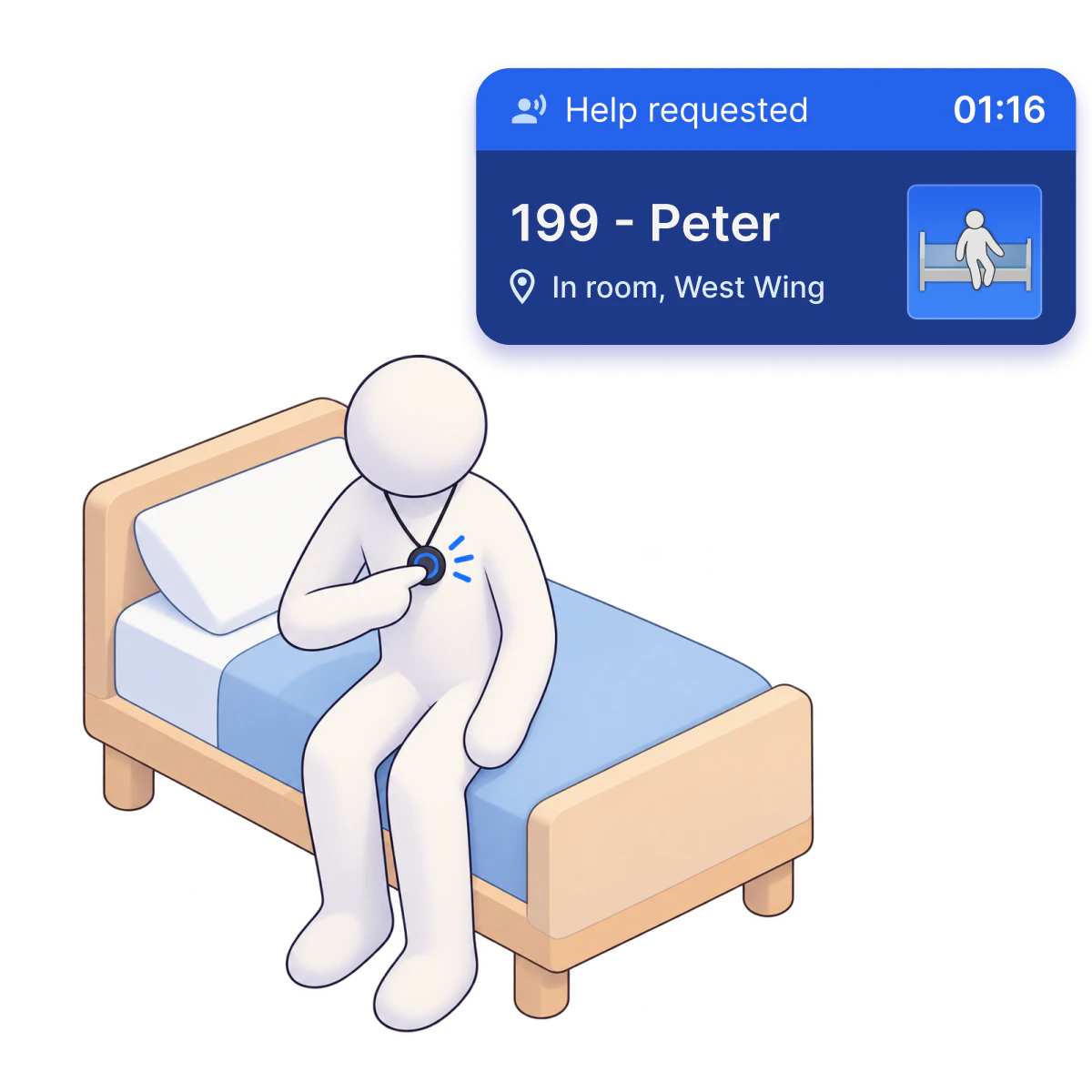
The request reaches staff with the room and what the resident is doing, before anyone sets off.
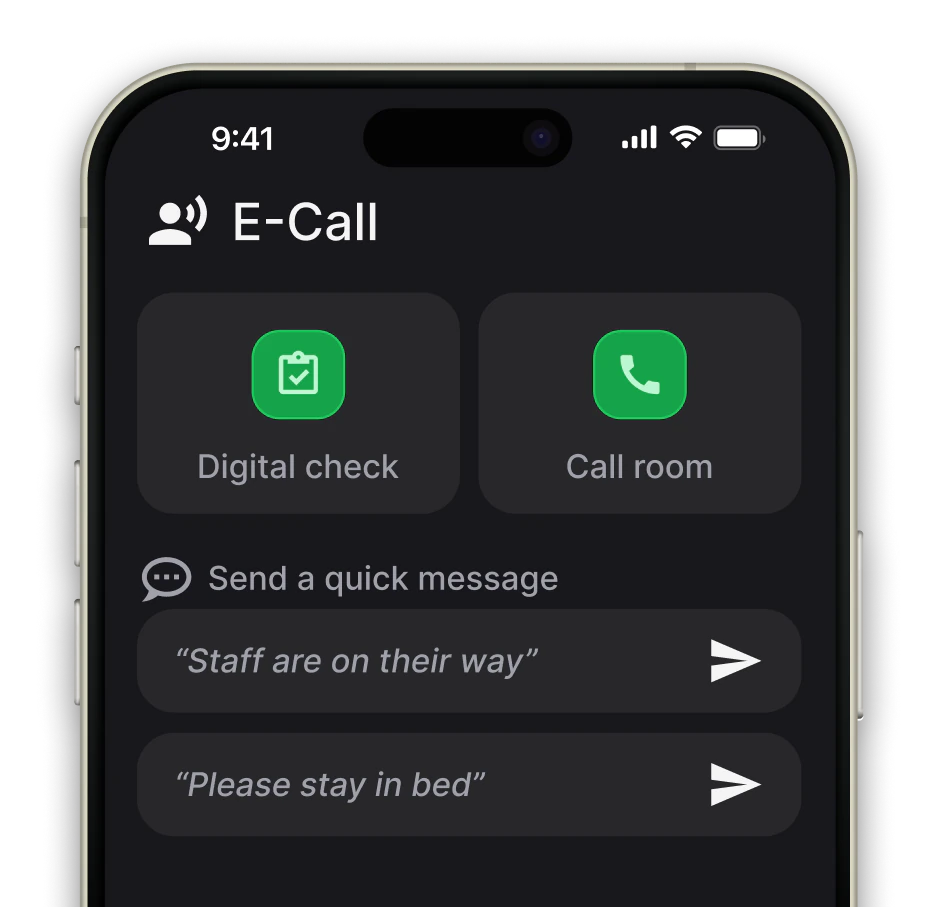
One tap claims the call. The resident can be told help is on the way rather than waiting in silence.
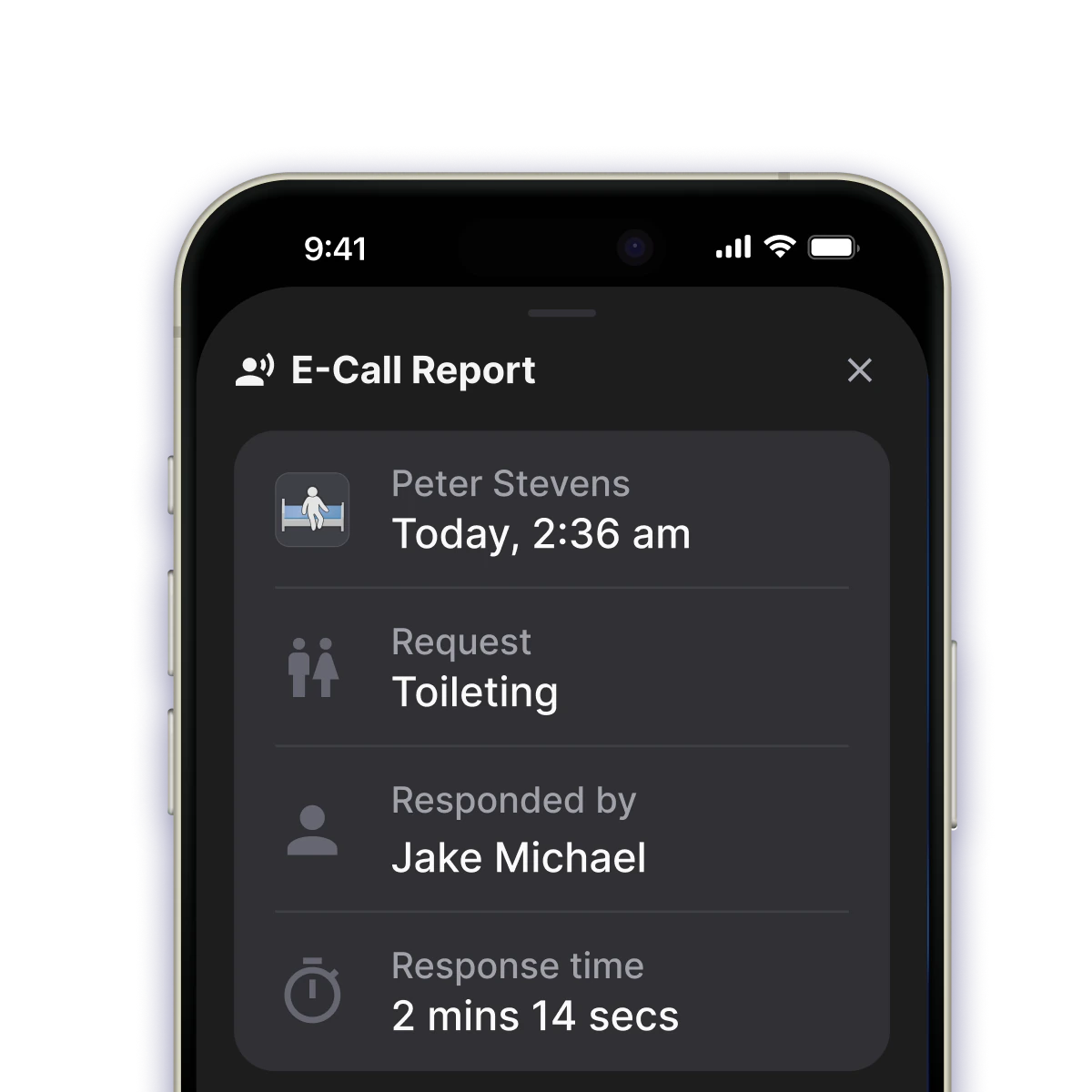
Closing it records what the assistance was, who went and how long it took.
Calls therefore arrive with context about the resident’s activity, and staff can perform a digital check, a pseudonymized still view of the room, to assess priority before responding, or call the resident directly.
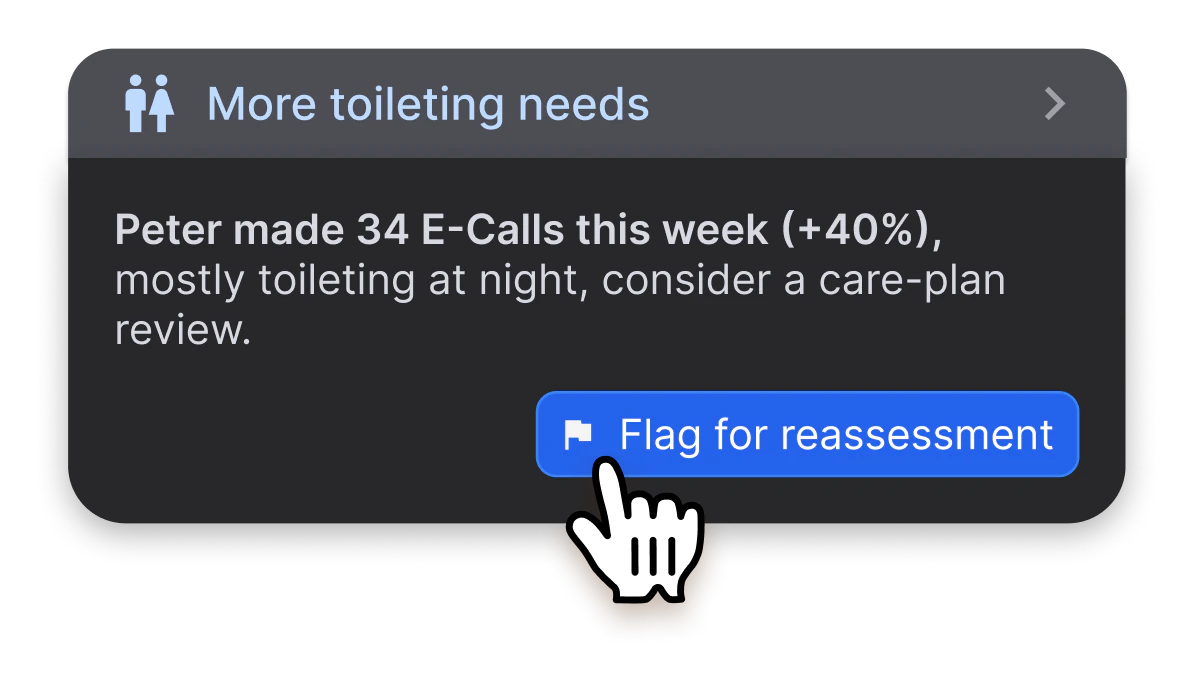
Through the same computer vision system, Teton automatically documents the care that was provided and feeds it into its care calibration system, which prioritizes residents who need a re-assessment. The solution also includes a full staff-to-staff communication platform, which care staff can use to talk to each other about residents by message or voice.
Two possible configurations
E-Call on the Teton platform. This configuration reflects the full capabilities described above. Resident activity and location context are provided upon a call, digital check, two-way audio, and the same app and record as fall management and the rest of the Teton workflows.
Standalone E-Call. For communities that just want to replace their call system, our E-Call system can also be configured without adding Teton sensors. This configuration does not include the full capabilities described above, but it allows communities to move their call system towards a platform which they later can upgrade to include fall detection, fall prevention, care calibration and other use cases that the full Teton platform enables.
Results so far: what the first four months at Wynwood House have shown
Wynwood House at State College, part of Aquinas Senior Living, was one of the first communities getting Teton E-Call.
37 residents used E-Call to request help 6,396 times between May 1 and August 31, 2026. The community began on a beta version on April 22, and the figures below cover the first four full months of use.
- Caregivers reached the room a median of 2.9 minutes after the press
- Nearly 30% of calls, 1,904 of them, fell between 7 p.m. and midnight, and 10 p.m. was the busiest hour at 428
- Seven residents accounted for roughly two thirds of all calls, and ten for about 80%
- Toileting was the most common documented night-shift request, at 53% of documented night-shift calls
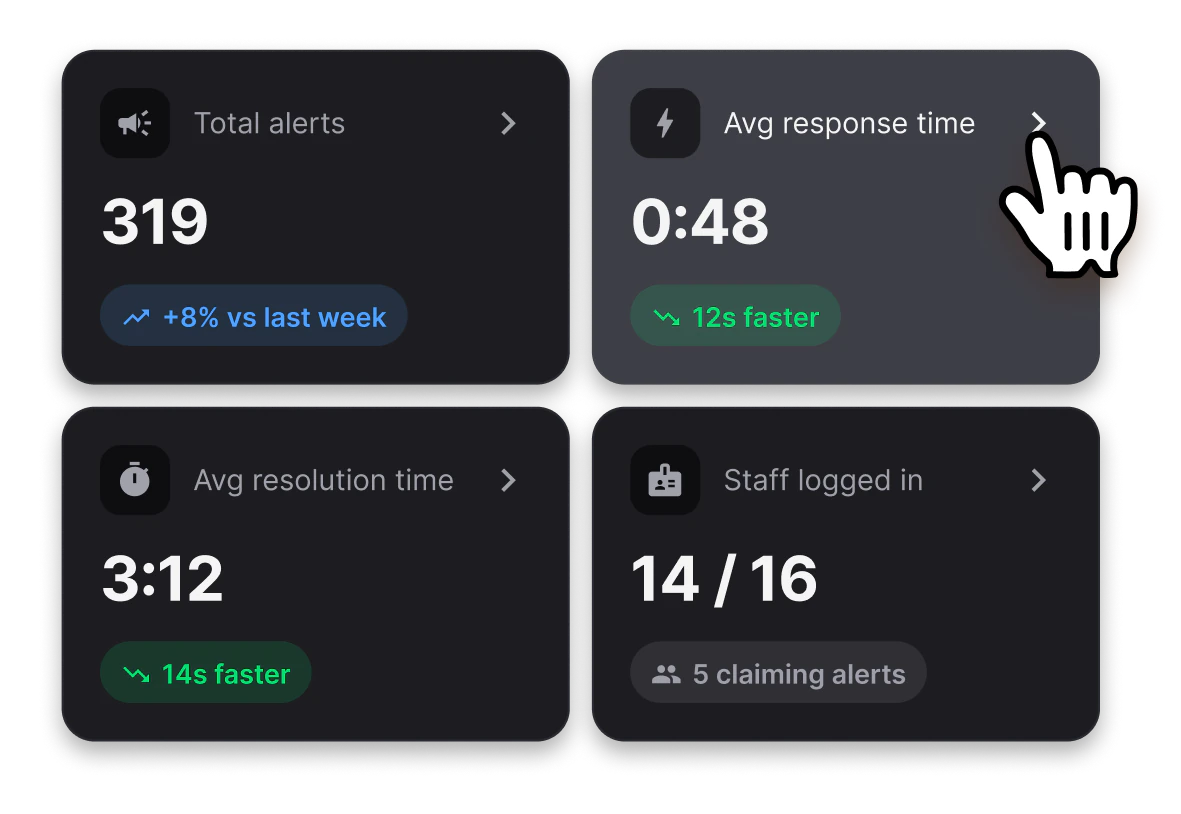
Four months in, Wynwood House knew when its residents ask for help, which of them ask most often and what they ask for. That allowed the team to build evening staffing plans around the hours demand actually lands, and to prioritize between requests during a shift rather than treat every call the same. Call volume also feeds Care Calibration when the team revisits a resident’s assessed level of need.
To learn more about Wynwood House, view the case study.
See it on your own floor
Teton E-Call is available now to Assisted Living, Memory Care and Independent Living communities. Book a demo.